Designing a natural ventilation system: How to cool a house without relying on A/C: common mistakes that cost you money
Why Your "Free Cooling" Might Be Costing You a Fortune
Last summer, my neighbor Steve spent $4,200 on emergency A/C repairs. The irony? His 1920s craftsman home was originally designed to stay cool without any mechanical cooling. Somewhere between then and now, someone screwed up the natural ventilation—and it's been bleeding money ever since.
Natural ventilation isn't just about throwing open some windows and hoping for the best. It's a battle between two approaches: the passive stack effect method and the cross-ventilation strategy. Most homeowners pick one, botch the execution, and end up cranking the thermostat down to 68°F anyway. Let's break down where people go wrong and what actually works.
The Stack Effect Approach: Vertical Ventilation
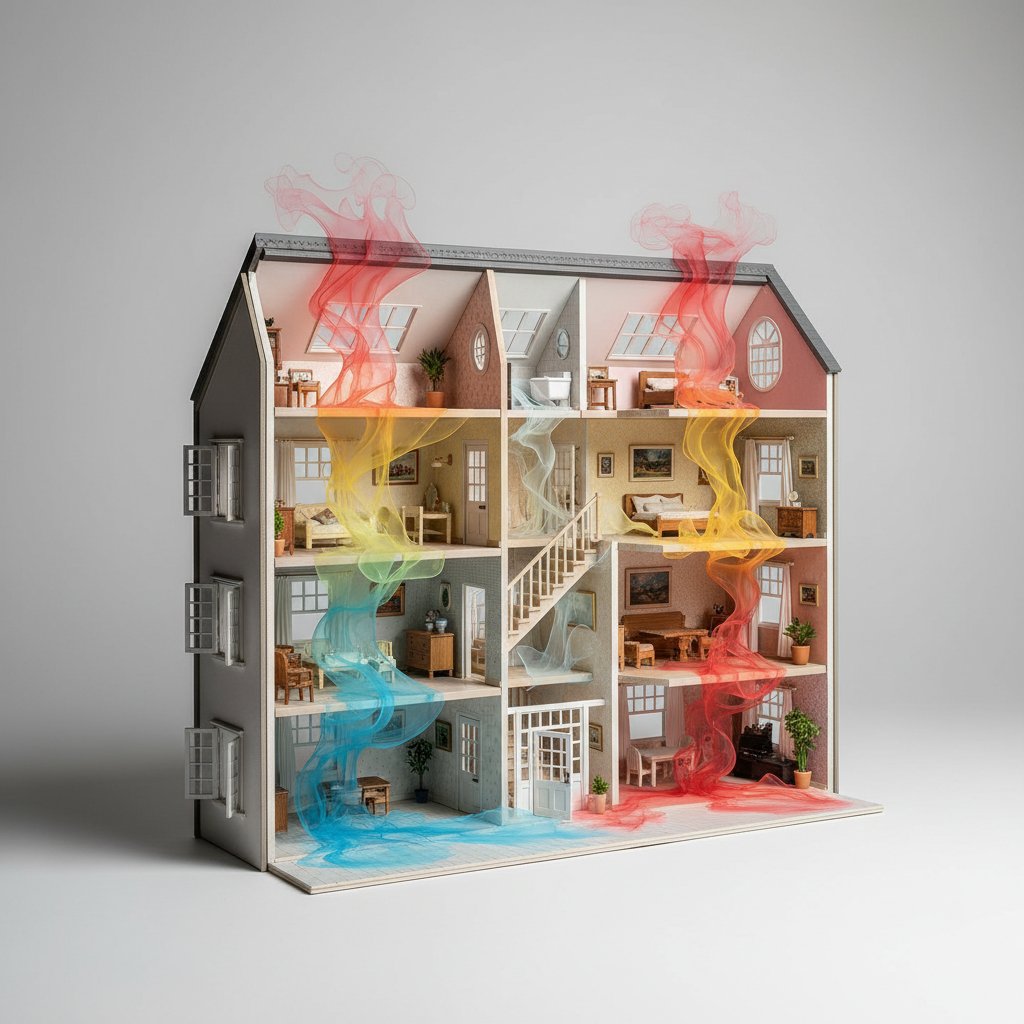
This method relies on hot air rising and escaping through upper-level openings while cool air gets pulled in below. Think Victorian homes with their tall ceilings and strategically placed transoms.
What Works in Its Favor:
- Consistent airflow even without wind – Physics does the heavy lifting. Warm air rises at roughly 100 feet per minute in a properly designed stack, creating reliable air movement regardless of outdoor conditions.
- Works brilliantly in multi-story homes – A two-story home with 18-foot vertical separation can generate natural pressure differences of 0.5 to 2.0 Pascals, enough to move 200-400 cubic feet of air per minute.
- Architectural elegance – Clerestory windows, cupolas, and roof vents can actually increase property value by 3-7% according to recent appraisal data.
- Handles internal heat sources effectively – That heat from your kitchen or home office? Stack effect whisks it away before it spreads.
Where It Falls Apart:
- Expensive to retrofit – Adding a proper thermal chimney or roof monitor to an existing home runs $8,000-$25,000. Cutting through your roof isn't cheap.
- Temperature differential dependency – When it's 95°F outside and 92°F inside, you've got almost zero driving force. Stack effect needs at least a 5-10°F difference to work effectively.
- Security concerns – Upper-level openings need to stay open overnight when cooling matters most. That's when most break-ins happen.
- Rain infiltration risks – One improperly flashed roof vent leads to $3,000 in water damage faster than you can say "homeowner's insurance deductible."
Cross-Ventilation Strategy: Horizontal Airflow
This approach captures prevailing breezes and pushes them through your living space. Ranch homes and bungalows were built around this concept for decades.
What Works in Its Favor:
- Lower installation costs – Strategic window placement during construction adds maybe $800-$1,500 to your build. Retrofitting with additional windows runs $3,000-$8,000 total.
- Immediate cooling sensation – Air moving across skin at just 2 mph creates a perceived temperature drop of 5-7°F. You feel cooler even when the thermometer disagrees.
- Easier to control – Open the windows you want, when you want. No complicated systems or permanent architectural changes required.
- Works in single-story homes – You don't need vertical space. A 40-foot wide ranch can move serious air with proper inlet and outlet placement.
Where It Falls Apart:
- Completely wind-dependent – No breeze? No cooling. About 15-20% of summer days in most climates feature wind speeds under 2 mph—essentially useless for cross-ventilation.
- Requires specific orientation – Your windows need to align with prevailing winds. If your home faces the wrong direction, you're fighting a losing battle. Reorienting a house: not really an option.
- Furniture and floor plan limitations – That interior wall you want for the home theater? It's blocking your airflow path. Open floor plans work; compartmentalized layouts don't.
- Noise and pollution intrusion – Live near a highway? Cross-ventilation means breathing in exhaust fumes and listening to traffic all night.
Head-to-Head Comparison
| Factor | Stack Effect | Cross-Ventilation |
|---|---|---|
| Retrofit Cost | $8,000-$25,000 | $3,000-$8,000 |
| Reliability | Works 80-90% of cooling season | Works 60-75% of cooling season |
| Best Home Type | Two-story, vertical design | Single-story, open floor plan |
| Air Changes Per Hour | 3-8 ACH | 5-15 ACH (when wind cooperates) |
| Security Risk | Moderate (upper openings) | Higher (ground-level windows) |
| Maintenance | Annual inspections critical | Minimal (window screens) |
The Real Answer Nobody Wants to Hear
Here's what actually works: combining both strategies instead of picking sides. The homes that stay genuinely comfortable without A/C use cross-ventilation during breezy afternoons and stack effect during still evenings. They're designed with operable windows at multiple levels, positioned to catch prevailing winds AND create vertical air movement.
The biggest money pit? Trying to retrofit one system onto a home designed for the other. That's Steve's problem. His house had excellent bones for stack ventilation, but someone sealed up the upper vents and added a cathedral ceiling that trapped hot air. Now he fights physics every summer.
Smart money goes toward understanding your home's existing advantages. Two-story colonial? Invest in upper-level ventilation and thermal chimneys. Rambling ranch? Perfect your window strategy and add whole-house fans ($1,200-$2,800 installed) to boost cross-ventilation on still days.
The ventilation system that costs you money is the one fighting against your home's natural tendencies. Work with your architecture, not against it, and you'll actually have a shot at keeping that A/C off.